

The A.I. Craze is a Convenient Distraction from the Real Problem: Weak Labor Unions
Don't Trust the A.I. Hype.

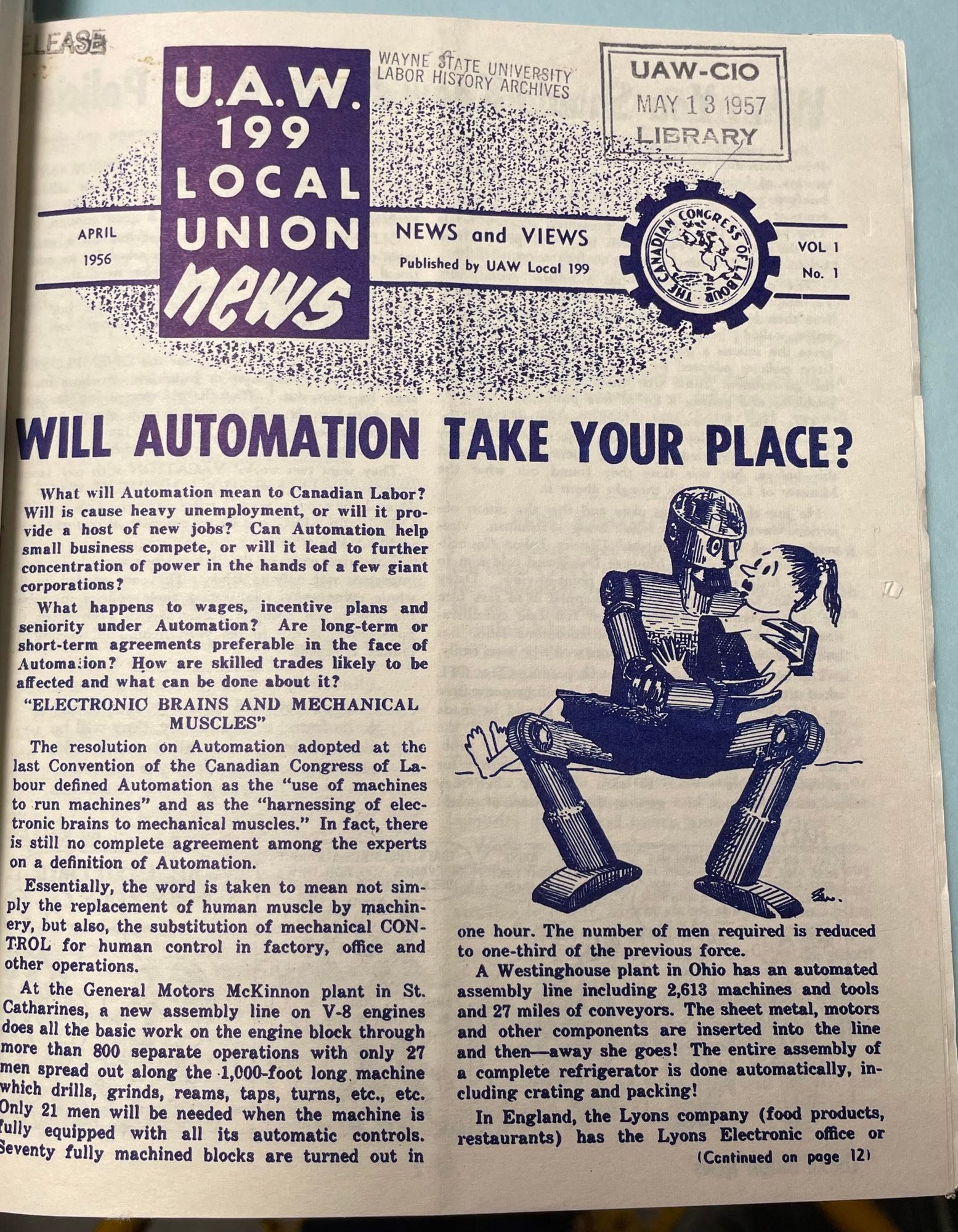
A.I. is breaking people’s brains. In the past few weeks, I’ve read about people using it to cope with chronic illness and other psychological maladies. I’ve even identified A.I. speech in the real world… What’s more, the stock market hasn’t crashed yet because the A.I. boom is driving up investments, while also raising fears of a dot-com era bubble in the pages of the Wall Street Journal. Stock market valuations are breaking records, spurred by Big Tech: Chip maker Nvidia became the first public company worth $4 trillion in July. Like the Roman god Saturn, Big Tech is gobbling up talent through acquisitions, investments, and poaching, devouring whole teams from startups and prompting the Wall Street Journal to fret over whether this will drain the talent pool for tech-bro wizards locked in the dungeons of startups. Startups are where these lesser gods duke it out in the capitalist hunger games to level up to tech Olympians like Alphabet, OpenAI, Microsoft, Apple, and Amazon. (Why all the Wall Street Journal citations? Yes, I read the bourgeois press everyday during my lunch break at my local public library). But back here in the lower frequencies of class struggle, we have different concerns. While there are legitimate changes happening in the workplace from classrooms to warehouses, which I’ll be writing about here and elsewhere, the biggest changes are in the human mind.
Example one is from a recent devastating New York Times article about a person who sought psychological help from a Chatbot, hiding her suicidal thoughts from her real-world human therapist and ultimately killing herself.
“In clinical settings, suicidal ideation like Sophie’s typically interrupts a therapy session, triggering a checklist and a safety plan. Harry suggested that Sophie have one. But could A.I. be programmed to force a user to complete a mandatory safety plan before proceeding with any further advice or “therapy”? Working with experts in suicidology, A.I. companies might find ways to better connect users to the right resources.
If Harry had been a flesh-and-blood therapist rather than a chatbot, he might have encouraged inpatient treatment or had Sophie involuntarily committed until she was in a safe place. We can’t know if that would have saved her. Perhaps fearing those possibilities, Sophie held her darkest thoughts back from her actual therapist. Talking to a robot — always available, never judgy — had fewer consequences.”
But ideological mystification is another way the A.I. craze is breaking people’s minds, obscuring the relationship between capital and labor. Which brings us to the title of today’s post. As workplaces undergo new transformations amid an employer offensive and deregulation bonanza, unions have never been weaker in the history of the labor movement.
The word automation was coined at Ford Motor Company in Buffalo, New York, in the late 1940s.
Example two is from the United Auto Workers. At the 1953 UAW-CIO convention, the delegates adopted a resolution to respond to the advent of the “Second Industrial Revolution.” In a later report, Nat Weinberg, the UAW’s chief economist, likened automation to “Watt’s steam engine and Ford's assembly line.”
"Properly used, they can advance by many years the realization in America man’s age old dream of an economy of abundance,” read a quoted section of the resolution. “Improperly used, for narrow and selfish purposes, they can create a social and economic nightmare in which men walk idle and hungry--made obsolete as producers because the mechanical monsters around them cannot replace them as consumers."
“As knowledge of automation and electronic computers has spread outside toe plants and offices where they are in operation, a broader public has become increasingly aware of a promise to be realized and a threat to be averted,” Weinberg wrote. “Nowhere outside management circles are the consequences of the new technology complacently assumed to be inevitably good. Even a few management spokesmen are beginning to hint uneasily that something more may be needed than incantations of natural economic forces that ‘in the long run’ will protect us against the horrors of mass technological unemployment.”
“Workers face the new technology in their dual role as trade unionists and as citizens,” wrote the UAW’s Weinberg. “The hope that the potential blessings of the Second Industrial Revolution may be won without the awful human cost exacted by the First rests largely on the intervening change in the status of those who would otherwise have to bear the brunt of that cost. The existence of trade unions gives workers a means of expressing their will both in their plants and in the community.”
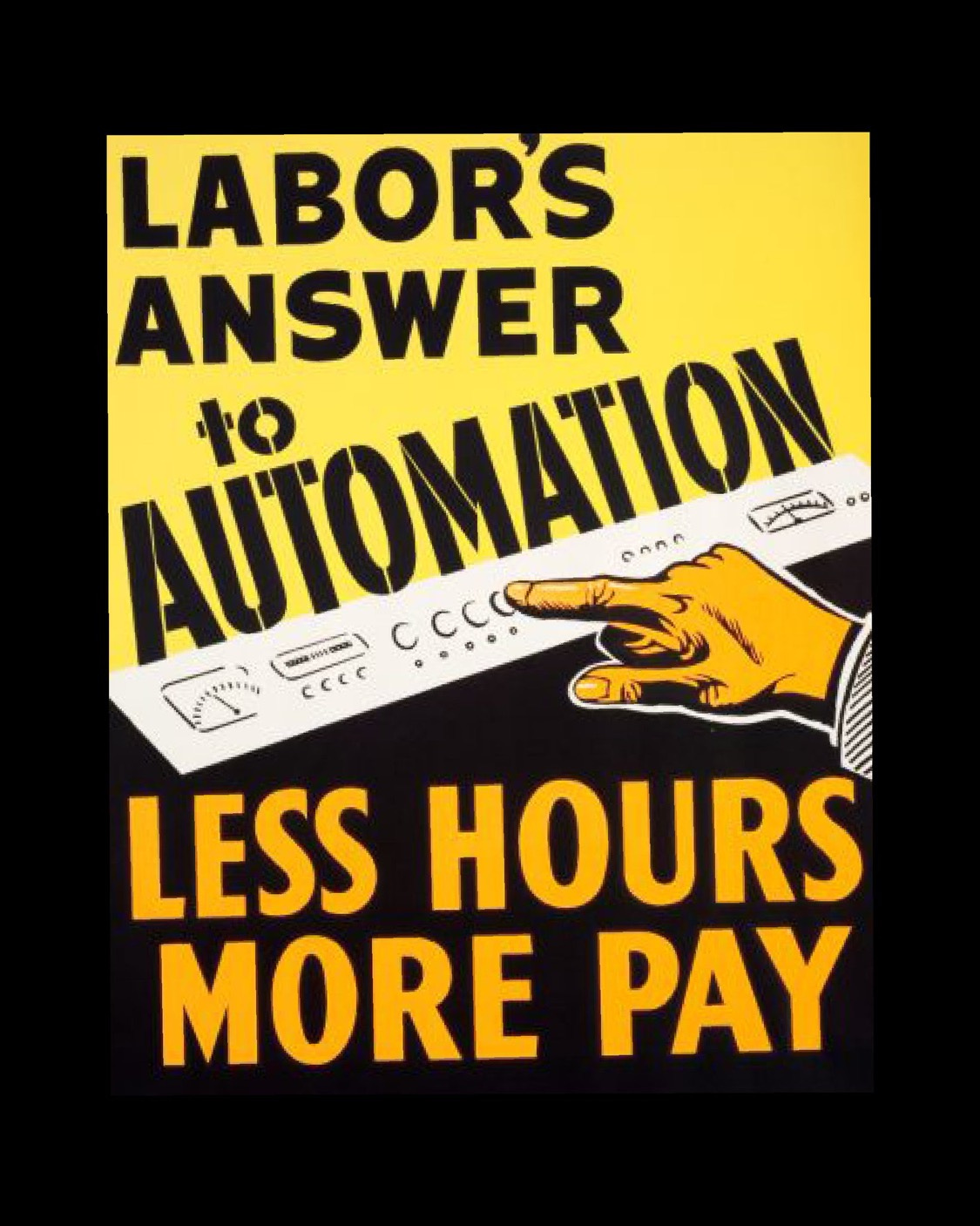
Behind the ideological hocus-pocus of tech boy-geniuses and the century-old fear of human obsolescence lies the question of political choice and power. What kind of world do we want to live in and how do we build power to realize it? In 1930, the economist John Maynard Keynes called the robot replacement “technological unemployment” under industrial capitalism. Only U.S. entry into World War II would link citizenship and consumption, transforming crisis of overproduction and underconsumption until the onset of stagflation in the 1970s.
In a face-to-face exchange between Henry Ford II and the UAW’s Walter Reuther in the 1950s, as they toured a new engine plant in Cleveland, Ford said, pointing to the machines: “How are you going to get those robots to pay your union dues?” Reuther responded by highlighting the purchasing power of citizen workers in a “consumers’ republic:” “Henry, how are you going to get them to buy your cars?”
In 1955, Weinberg was instrumental in helping the UAW win supplemental unemployment insurance benefits for auto workers at Ford. At General Motors, the 1950 Treaty of Detroit represented a retreat on the question of “production standards,” or workers’ control over the shop floor, in exchange for higher wages, cost-of-living adjustments, pensions, and company-paid health insurance. But these concessions, even if we disagree with the Faustian pact that traded workers’ control for higher wages and benefits, were only possible because of the strength of the labor movement.
Strong unions are the answer to the employer's offensive and not distracting hype in the bourgeois press about A.I. Stay tuned for more about where there are legitimate layoffs happening and where there is just investor noise.
P.S. I’ll be publishing a longer essay in Dissent magazine that elaborates on these points about automation with a focus on Amazon. For now, I leave you with my favorite song by Public Enemy, Can’t Truss It. That goes for all sorts of situations involving the claims of bosses, whether about artificial intelligence or any other newfangled theories to pad the bottomline and control workers.
* Let know if you have any questions or want me to expand on any point raised in the write up. Also, please consider becoming a paid subscriber if you want me to keep up these posts or if you find them useful.
* At the height of the pandemic, when layoffs were surging and supply-chain snarls were shutting down businesses, NYC needed workers to disinfect its subway trains and stations, as union members with Transport Workers Union Local 100 who usually cleaned the subways were grappling with pandemic-related illness and a temporary solution was needed to keep the trains running with contracted workers. Hundreds of immigrant workers answered the call, but the companies that hired them robbed them of the wages they were supposed to earn. Five years later, they’ll share $3 million in back wages. But that’s small comfort for Catalonia Cruz, one of the workers, because she just lost her job as an airport ramp worker due to Trump’s crackdown on immigrant workers. Once deemed essential and lionized for their sacrifices, immigrant workers are losing their jobs, the targets of a racist revanchist campaign of nationalism that wants to make America white like it never was ever. Here’s my story about their ordeal for In These Times magazine. Give it a read and share it widely. I also wrote about the train cleaners for The American Prospect in 2020.